Streaming Research Project
Have you noticed more advertising on you streaming platforms recently?
How does increased advertising affect your streaming usage and habits?
These are questions at the center of a research project I was recently involved with. Especially with the landscape of streaming undergoing massive change, such as Netflix’s introduction of an ad-supported (i.e. content with ad breaks) plan in 2022, we were curious how this increased advertising affects consumer’s decision-making process surrounding streaming platforms.
Our research team conducted an exploratory, in-depth interview study to understand the lived experiences of streaming subscribers. This was all written up into a paper that was submitted to and accepted by the American Academy of Advertising (AAA) 2024 conference, which we travelled to and presented at in March of 2024.
Key Skills:
Qualitative Research
Interviewing
Qualitative Coding
Thematic Analysis
Conference Presentation
Academic Writing
Research
Interviews
This project started as an interview study in the class, ADV 582: Qualitative Research Methods in Advertising in March 2023. As a class we developed an interview protocol for our in-depth interviews. It contained 3 main sections: Media Use, Streaming Service usage, and “Advertising and Streaming”. This was done to broadly get a sense of consumer’s feelings about advertising and their broader media and streaming patterns.
13 interviews were conducted using this interview protocol (~30-45 min each) over Zoom. These interviews were then transcribed, resulting in over 200 pages of data to analyze.
Analysis
For the AAA conference, a team of myself and three other students continued this project past the semester. We wanted to focus this project around advertising avoidance, so multiple rounds of qualitative coding and thematic analysis were performed to uncover insights and trends within the interview data.
In analysis, we found that people have noticed an increase in advertising on streaming platforms and do have strong reactions, emotions, and opinions about the matter.
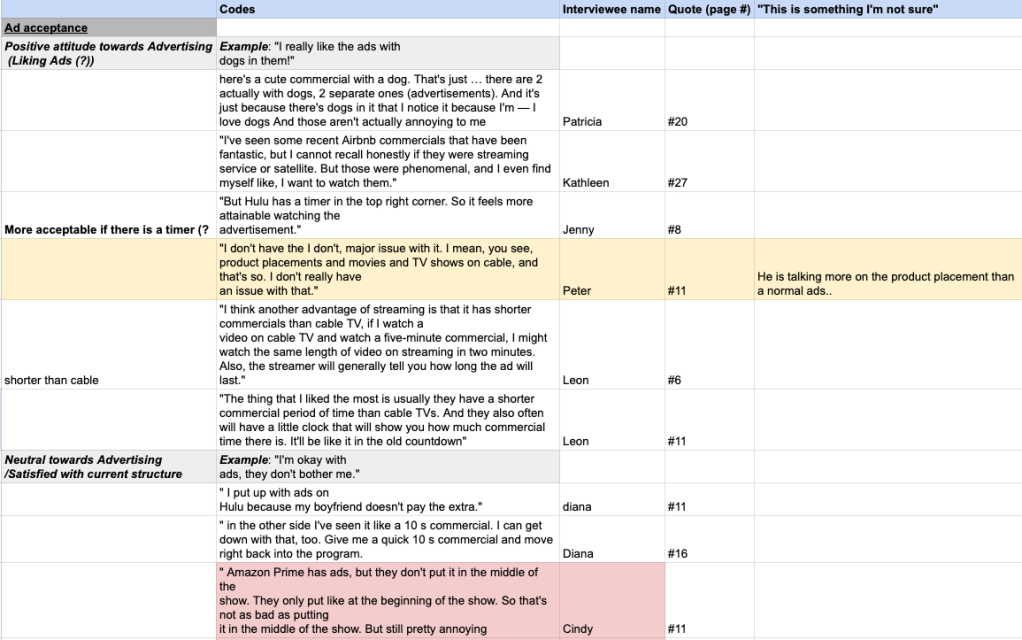
What is different about these reactions than for example, advertising on cable, is that it seemed that consumers views of advertising are being becoming increasingly nuanced, revealing sub-categories within advertising avoidance and/or acceptance; it is very much a spectrum. Additionally, people are continually finding new ways to avoid advertising, utilizing features like ad countdown timers and adblockers, making these patterns of avoidance unique in many ways to streaming (as opposed to cable).
Results
We developed three broad themes that all interviewees fit into, based on our own analysis and existing ad avoidance literature:
Ad Acceptance
Viewers who tolerate and in some cases, even enjoy the advertising they see on streaming platforms.
Sub-Themes: Positive Acceptance, Neutral Acceptance
Ad Avoidance
People who consciously dislike and make concerted efforts to ignore and avoid advertising.
Sub-Themes: Cognitive Ad Avoidance, Emotional Ad Avoidance, Behavioral Ad Avoidance
“Necessary Evil”
Viewers who understand that ads are essential to streaming. They accept ads, but face the dilemma of feeling negative attitudes.
Ads as a “Necessary Evil” was a new theme that we found in our research. It is the idea that while people didn’t love advertising, they understood and appreciated why it was there. This theme is new in advertising avoidance and streaming literature, a great result for our exploratory research study!
Conference
Our paper “Hey, You Put Ads in My Netflix: How Audiences Negotiate the Changing Streaming Video Landscape” contributes to this line of research by:
- Exploring further what “ad avoidance” is, especially in a streaming-specific context
- Discovering and explicating the idea of advertising as a “necessary evil”
- Supports the idea of a changing streaming landscape causing viewer reactance
We submitted this paper to the American Academy of Advertising conference in September 2023 and it was accepted!
Myself and my three team member travelled to Portland, OR from March 14th – March 17th, 2024 to present. I, along with one of my colleagues presented the paper.
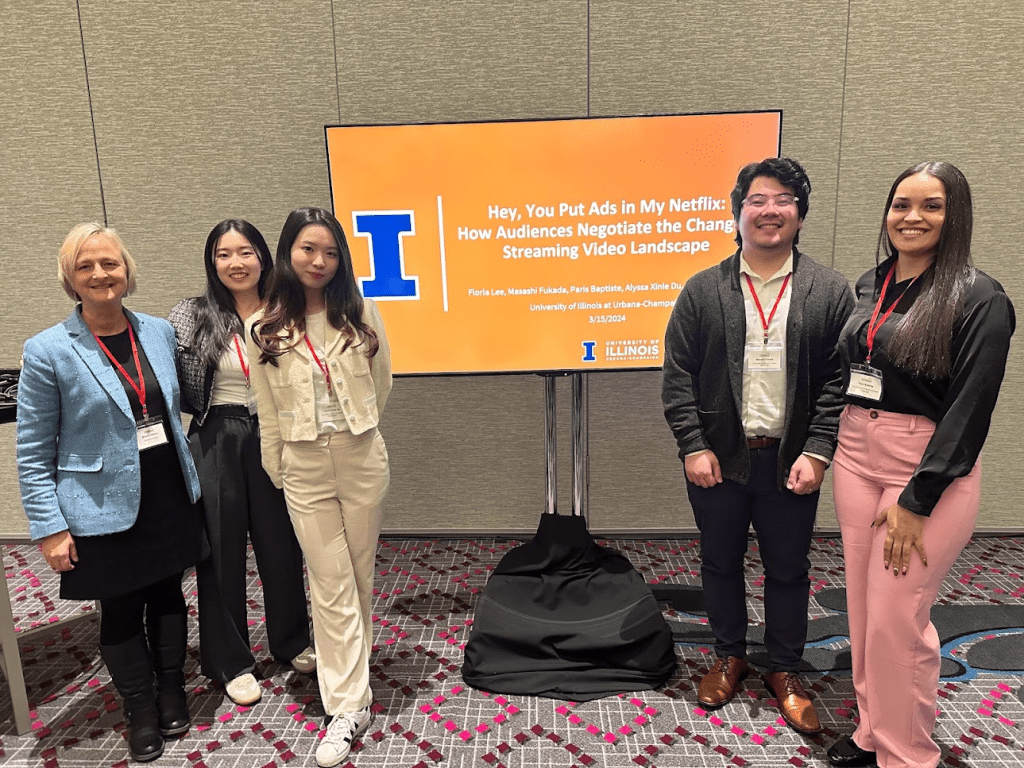
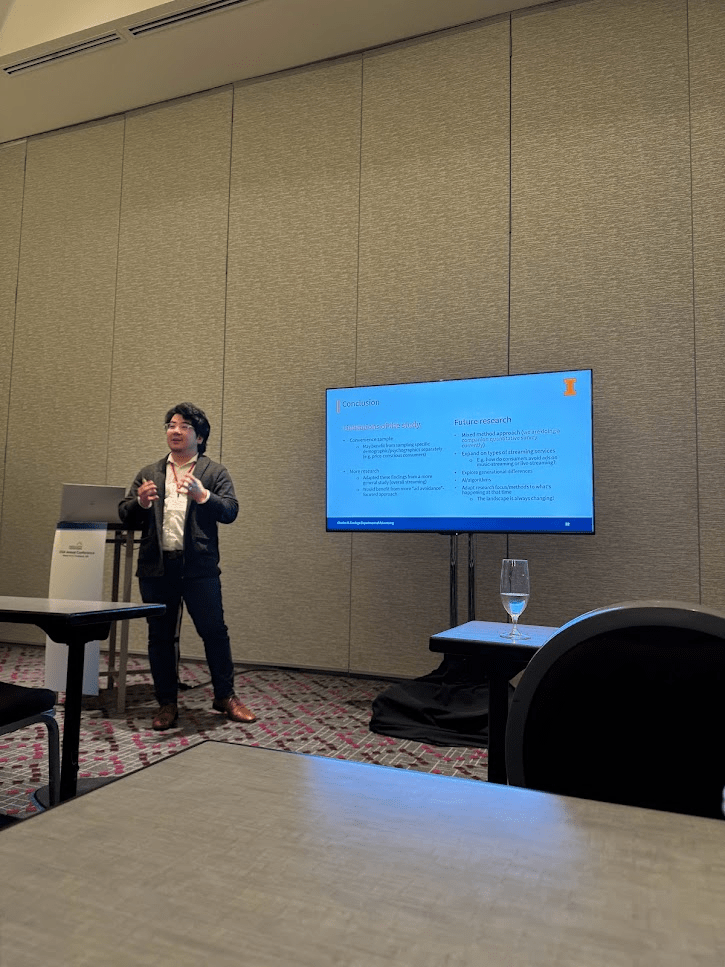
Overall, I had a wonderful time conducting this research, writing the paper, and ultimately, presenting this paper at a conference. This was the first time for myself or any of my team to prepare for and present at a conference; I am hoping it is on the last!
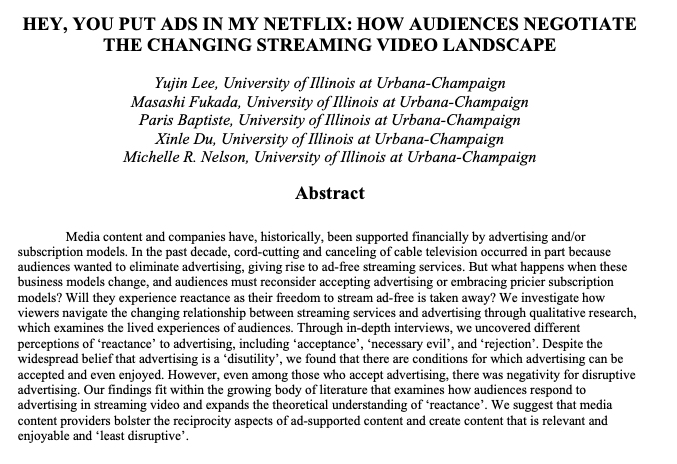
Currently, this paper is not publicly available. However, see the paper’s abstract to the left from the conference’s 2024 proceedings. This “case study” on this website is a very brief, boiled down version of our paper, so if you are interested in further details on our research process, literature review, theories that we incorporated, please feel free reach out to me at mjfukada@gmail.com to talk!
 masashifukada.com